
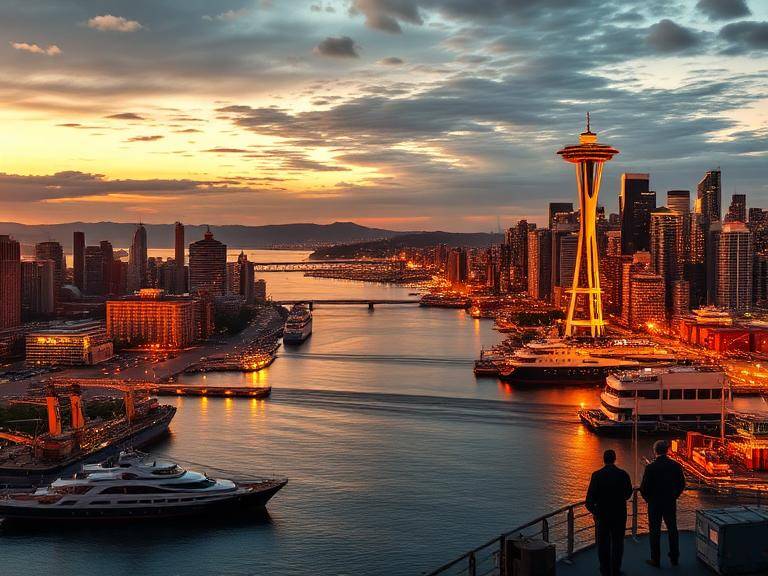
Massachusetts vs. Washington: Innovation, Coastal Trade and the Future Economy
Content Summary
Massachusetts and Washington sit on opposite coasts, yet they share remarkably similar economic DNA. Both states are recognized as innovation powerhouses, home to world-class universities, thriving technology industries, and globally connected ports that link American businesses to international markets. Massachusetts built its economy around maritime trade, higher education, biotechnology, and research. Washington combined Pacific trade, aerospace leadership, and a modern technology sector that includes some of the world's most influential companies.
Today, both states rank among America's most educated and innovation-driven economies. From Boston and Cambridge to Seattle and Bellevue, talent, research, entrepreneurship, and global commerce shape daily life and long-term growth.
Key similarities include:
- Global leadership in technology and innovation
- World-renowned universities and research institutions
- Strong coastal economies connected to international trade and commerce
Together, Massachusetts and Washington demonstrate how education, innovation, and strategic coastal geography can create some of the most dynamic economies in the United States.
Introduction
Massachusetts and Washington occupy opposite corners of the country, but their economic stories have surprising parallels. Each state leveraged its coastal location to build global connections, attract investment, and become a gateway for ideas, talent, and trade.
Massachusetts has long been associated with higher education, biotechnology, advanced research, and entrepreneurship. Washington developed into a major center for Pacific trade, aerospace manufacturing, and technology innovation led by companies that have transformed the global economy.
Today, both states attract ambitious students, researchers, entrepreneurs, and skilled workers from around the world. Their cities consistently rank among the nation's leaders in education, technology, and economic opportunity.
From the historic ports of Boston Harbor to the busy container terminals of Puget Sound, Massachusetts and Washington prove that coastal states can be both trading hubs and innovation centers.
💻 Technology, Innovation and Entrepreneurial Leadership
Massachusetts
- Home to one of the world's leading biotechnology and life sciences ecosystems
- Boston and Cambridge support thousands of startups and research-driven companies
- Strong venture capital investment fuels entrepreneurship and innovation
- Growing strengths in robotics, artificial intelligence, and healthcare technology
Washington
- Home to globally influential technology companies and digital innovation leaders
- Seattle region serves as one of America's most important technology hubs
- Strong ecosystem for cloud computing, software development, and e-commerce
- Emerging growth in artificial intelligence, clean technology, and advanced manufacturing
Where they align:
Both states thrive by transforming ideas into industries. Massachusetts excels in research-driven innovation and biotechnology, while Washington has become synonymous with software, cloud technology, and digital commerce. In both places, innovation is a defining part of the economy and culture.
🎓 Higher Education, Research and Talent Development
Massachusetts
- Home to Harvard University, MIT, Boston University, Northeastern University, and UMass
- Global reputation for scientific research and academic excellence
- Strong university-industry partnerships drive innovation
- Continues to attract students and researchers from around the world
Washington
- Home to the University of Washington, Washington State University, Western Washington University, and other respected institutions
- Strong reputation in computer science, engineering, medicine, and environmental research
- Universities contribute significantly to workforce development and innovation
- Research partnerships support growth across technology and healthcare sectors
Shared strength:
Education is a cornerstone of economic success in both states. Their universities generate research, attract talent, and provide the skilled workforce needed to support high-growth industries.
🚢 Coastal Trade, Ports and Global Connectivity
Massachusetts
- Historic maritime economy dating back to colonial trade routes
- Port of Boston remains an important commercial and logistics center
- Strong connections to European and global markets
- Maritime industries continue to support transportation and economic activity
Washington
- Home to some of the busiest ports on the West Coast
- Strategic gateway for trade with Asia-Pacific markets
- Maritime shipping plays a critical role in the state's economy
- Ports support agriculture, manufacturing, retail, and technology supply chains
Common ground:
Both states use their coastal locations as economic advantages. Massachusetts connects the Northeast to global markets, while Washington serves as a major bridge between North America and the Pacific Rim.
🌿 Sustainability, Environment and Natural Resources
Massachusetts
- Active investments in climate resilience and clean energy initiatives
- Focus on offshore wind development and renewable energy innovation
- Extensive coastline creates both opportunities and environmental challenges
- Strong public interest in conservation and sustainability
Washington
- Known for abundant forests, mountains, waterways, and hydroelectric resources
- Long-standing commitment to environmental stewardship
- Significant clean energy production supports economic growth
- Outdoor recreation and conservation play important roles in state identity
Shared commitment:
Both states recognize that economic growth and environmental responsibility must work together. Investments in renewable energy, sustainability, and climate adaptation are increasingly important to their long-term strategies.
🧪 Research, Biotechnology and Future Industries
Massachusetts
- International leader in biotechnology and pharmaceutical development
- Dense concentration of research hospitals and life sciences companies
- Major hub for medical innovation and healthcare technology
- Strong collaboration between universities and industry
Washington
- Expanding biotechnology and life sciences sector
- Significant medical and health research activity
- Growing investment in advanced manufacturing and clean technology
- Increasing collaboration between research institutions and private industry
Shared advantage:
Both states invest heavily in research and innovation. While Massachusetts has a larger presence in biotechnology, Washington continues to expand its footprint in life sciences and advanced technology development.
🧳 Tourism, Outdoor Recreation and Regional Identity
Massachusetts
- Visitors are drawn to Boston, Cape Cod, Martha's Vineyard, Salem, and Plymouth
- Rich blend of history, culture, and coastal recreation
- Museums, universities, and historic sites attract international visitors
- Distinct New England character defines much of the tourism experience
Washington
- Popular destinations include Seattle, Olympic National Park, Mount Rainier, and the San Juan Islands
- Outdoor recreation is central to the state's identity
- Diverse landscapes attract hikers, kayakers, skiers, and nature enthusiasts
- Strong combination of urban culture and natural beauty
Shared appeal:
Both states combine vibrant cities with exceptional outdoor experiences. Whether exploring New England coastlines or Pacific Northwest mountains, visitors encounter unique regional identities shaped by water, history, and culture.
⚖️ Shared Challenges, Distinct Approaches
Both Massachusetts and Washington face challenges involving housing affordability, transportation infrastructure, workforce development, and maintaining competitiveness in a rapidly evolving economy.
Massachusetts
- Focus on expanding housing supply in high-demand regions
- Continued investments in transit, research, and innovation
- Emphasis on maintaining leadership in education and life sciences
Washington
- Managing rapid population growth in major metropolitan areas
- Investments in transportation and technology infrastructure
- Balancing economic expansion with environmental priorities
Their shared outlook:
Both states understand that attracting talent requires more than economic opportunity. Long-term success depends on housing, infrastructure, sustainability, and maintaining the quality of life that makes these regions attractive.
Conclusion
Massachusetts and Washington are separated by thousands of miles, but they share many of the same strengths. Both transformed coastal geography into economic opportunity, built world-class education systems, and established themselves as innovation leaders.
Massachusetts draws strength from its deep academic and biotechnology roots, while Washington has become a global force in technology, trade, and digital innovation. Together, they illustrate how investment in knowledge, research, and global connectivity can create enduring economic success.
The Bay State and the Evergreen State prove that America's future is often built along its coasts, where ideas, talent, and trade come together to drive growth.


Comments(5)