
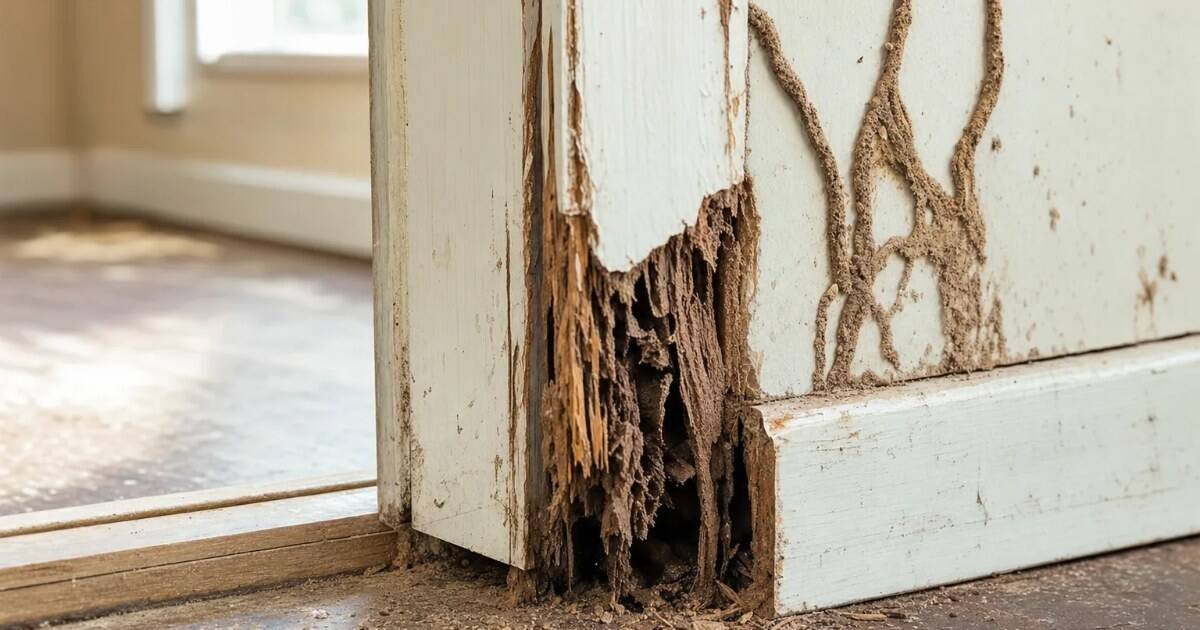
Selling a house with termite damage in Beaumont starts with two pieces of paper. One is the Texas seller's disclosure notice, which asks you directly about termites. The other is the wood destroying insect report a buyer's inspector or lender may order. Most of the trouble I see in these sales comes from the gap between what the owner knew, what the form asked, and what the report could actually see.
I buy older houses in Southeast Texas, many of them with soft floors, sagging door frames or a past treatment nobody wrote down. This post walks through what the disclosure form asks, what a WDI report is and is not, and how I would think through repairing versus selling as it is. I read the statute and the state inspection rules on October 9, 2026, and the quotes below are from that reading.
What the Texas disclosure form asks about termites
The seller's disclosure notice is written into Texas Property Code 5.008. Item 4 asks whether you are aware of a list of conditions, and four of them are about termites. The form lists "Active Termites (includes wood-destroying insects)", "Termite or Wood Rot Damage Needing Repair", "Previous Termite Damage" and "Previous Termite Treatment", each with a yes or no blank.
Look at how those are split. Damage that was repaired is still "Previous Termite Damage". A treatment ten years ago is still "Previous Termite Treatment". Fixing the problem does not turn the answer into a no. Item 3 adds known defects in floors, walls, the foundation or slab, and other structural components, so termite damage to framing can show up in two places on the same form.
The form is a statement of what you know, not a warranty. That cuts both ways. You are not promising there are no termites, but you are answering truthfully about the ones you know about. And if the notice reaches the buyer after the contract is signed, 5.008(f) gives the buyer the right to "terminate the contract for any reason within seven days after receiving the notice." For any reason, not only a termite reason.
What a wood destroying insect report covers
In Texas the termite inspection that goes with a sale has its own rules, written by the Texas Department of Agriculture's structural pest control program. Under 4 TAC 7.176(a), every inspection report on "the visible presence or absence of termites, other wood destroying insects and conditions conducive to infestation" in a real estate transaction "must be made on a form prescribed by the department." No changes to the form are allowed. Subsection (b) adds that a lender such as the Department of Veterans Affairs may want the results on its own form too, as a supplement to the state form.
The key word is visible. Under 4 TAC 7.175(a), the inspector examines the visible, accessible areas, and the rule says plainly that "there are instances when concealed infestations and/or damage may not be discovered. Examinations of inaccessible or obstructed areas are not required." Subsection (b) lists what counts as inaccessible, including attics nobody can get into, "the interior of hollow walls", and the space between a floor or porch deck and the ceiling or soffit below.

A clean WDI report does not mean there is no damage
Put those two rules side by side and the trap is obvious. The report is about insects and the conditions that invite them, in the places an inspector can see. It is not a structural report, and it is not a repair estimate. A house can come back with no visible activity while damage sits behind drywall or under a floor.
The rule also limits when the inspector recommends treatment on a sale report. For a Real Estate Transaction Inspection Report, 7.175(a) says there must be "visible evidence of active infestation" or visible evidence of a previous infestation "with no evidence of prior treatment" before a corrective treatment is recommended. So a house with old damage and paperwork showing it was treated may get no treatment recommendation at all. That is the rule working as written, not a clean bill of health.
For a seller, the practical point is simple. A clean report does not change what you already know. If you saw damage, treated it or paid for repairs, that belongs on the disclosure form whatever the report says.
Repair or sell as it is: how I would run the numbers
I am not going to give a repair cost here. I have not read a source I would trust for Beaumont termite repair prices, and the range depends entirely on what is found once walls and floors are opened. What I can give is the order I would work in.
First, get the WDI report and, if there is visible damage to framing, a separate opinion from someone qualified to judge structure. The WDI inspector is not there for that. Second, ask for a written repair scope, not a phone number. Third, add what the repair does to your timeline: the months the house sits while work is done, and the taxes, insurance and utilities you carry in the meantime. Fourth, compare the price you expect after repairs, minus those costs, with an as-is price for the house today.
The honest answer is sometimes repair. A termite problem caught early, treated and documented, with limited damage, can be a small line item on a listing. When the damage reaches structure, the scope is unknown, or the owner simply does not have the cash to open walls, the as-is route usually wins on certainty even when it loses on price.
Selling a house with termite damage without hiding it
Whatever route you take, write the disclosure for the reader who will open those walls later. Answer item 4 completely. Keep the treatment invoices and any repair records, and hand them over. A buyer who reads "previous termite damage, treated in a named year, repaired by a named company, invoice attached" is far less nervous than one who discovers it.
That is also how I buy them. When a Beaumont house has termite history, our page on how to sell a house as is covers that route for Texas sellers.
This is general information and not legal advice. I am not an attorney or a licensed pest control operator.
Sources: Texas Property Code 5.008, read on statutes.capitol.texas.gov on October 9, 2026; 4 Texas Administrative Code 7.175 and 7.176, read on law.cornell.edu the same day.


Comments(3)