
A renovation loan can look solid at closing and still go sideways after the first check is released. Materials may not be on site. Work may not match the approved scope. A contractor may be ahead on invoices but behind in actual progress. That is exactly where draw inspection services earn their value: they give lenders a clear, documented basis for releasing funds while helping borrowers and contractors keep the job moving.
For FHA HUD 203(k) projects, the draw process is not a casual site visit. It is a fund-control function tied to an approved work write-up, a borrower’s loan, HUD requirements, and a real construction schedule. When inspections are late, vague, or disconnected from the original scope, everyone feels it. Contractors wait for money, borrowers lose confidence, and lenders take on unnecessary risk.
What Draw Inspection Services Actually Do
A draw inspection confirms the work completed on a renovation project before funds are released. The inspector reviews the property, compares completed work against the approved scope and draw request, records observations, and provides the documentation the lender needs to make a funding decision.
That sounds straightforward until you consider what happens in the field. A contractor may request payment for drywall, but only a portion of the rooms may be finished. A line item may be substantially complete, yet the work may have visible defects that need correction. Materials may be delivered but not installed. Those distinctions matter because renovation funds are not meant to become an unsecured advance to the contractor.
A good inspection process does not try to manage the contractor’s business or guarantee workmanship. It verifies observable progress and identifies discrepancies that require the lender, borrower, contractor, or consultant to address. That boundary protects the inspector’s role while giving the lender usable information.
Why Lenders Need Strong Draw Controls
Renovation lending has more moving parts than a standard mortgage. The collateral is changing during construction, the scope is detailed, and money is released in stages. If draw funds are distributed without reliable evidence of completed work, the lender can be left with a partially renovated property and a depleted escrow account.
Strong draw controls help reduce several common problems: overpayment before work is complete, payments for work outside the approved scope, repeated draws with little visible progress, and last-minute budget shortages. They also create a cleaner record when questions arise later about what was inspected, what was approved, and why funds were released.
The goal is not to make contractors jump through hoops for the sake of it. Good contractors generally want a predictable draw process. They need to know what documentation is expected, when inspections will occur, and how payment decisions are made. Clear expectations make it easier for professionals to work with renovation lenders and harder for weak operators to hide behind vague invoices.
For lender teams, reliable inspections can also improve borrower communication. Rather than telling a borrower that a draw is delayed with no explanation, the team can point to a specific condition: incomplete work, missing documentation, a needed change order, or a scheduling issue. That is a much better conversation than guessing.
What a Proper Draw Inspection Should Review
The inspection starts with the approved scope of work and the current draw request. Without that baseline, an inspector can see activity at the property but cannot reliably determine whether the requested payment matches the project plan.
At the site, the inspector should assess visible completion by trade and line item, take clear photos, and note any work that is incomplete, damaged, or inconsistent with the approved scope. The report should distinguish between completed work, partially completed work, delivered materials, and work that cannot be verified at the time of the visit.
Four details make the report more useful to a lender:
- The property address, inspection date, and draw number
- A clear comparison of the draw request to observable progress
- Photos that support the reported conditions
- Notes on incomplete, disputed, or changed work that needs follow-up
The report should be factual. It is not the place for guesswork, contractor accusations, or vague statements such as “looks good.” If an item cannot be confirmed, say so. If work appears incomplete, identify the condition and location. A report that is clear enough for someone who was not at the property to understand is a report a lender can act on.
HUD 203(k) Draw Inspections Require Scope Discipline
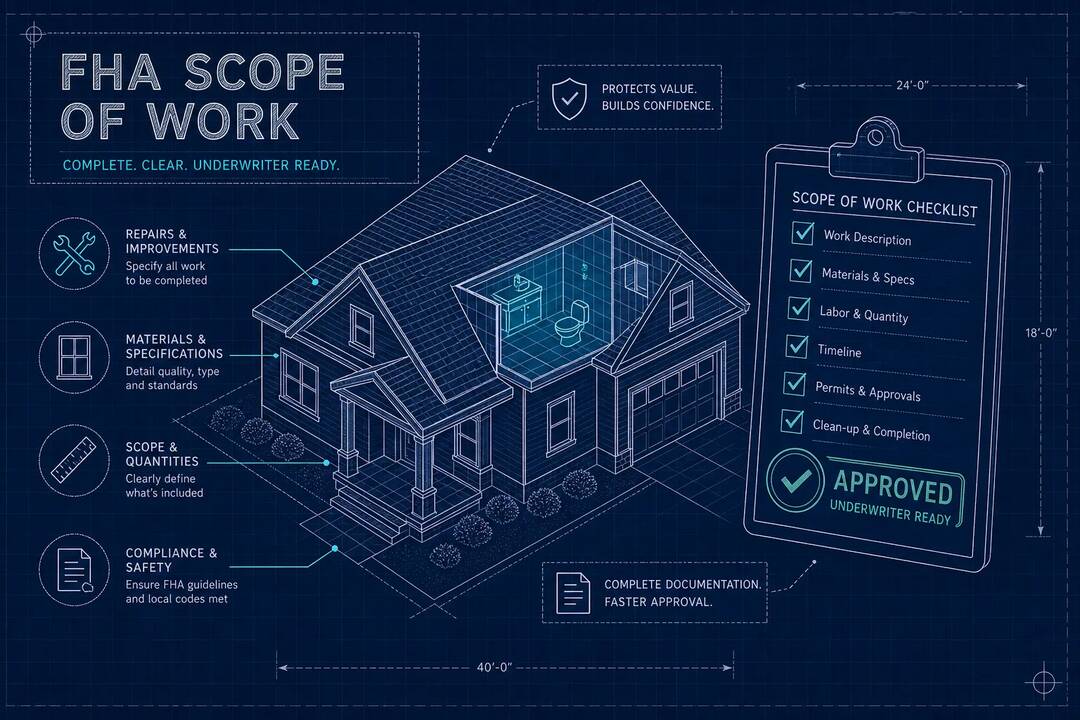
On a HUD 203(k) project, the approved work write-up is central to the draw process. It establishes what is expected to be completed, how costs are allocated, and how the renovation plan was presented for financing. When a contractor changes the work, adds costs, or shifts money between line items, the project may need a documented change order rather than an informal agreement at the job site.
That is why the inspector must understand more than construction progress. They need to understand how the project documents fit together. A beautiful new kitchen does not automatically justify payment if it was not part of the approved scope or if the request ignores unfinished safety repairs elsewhere in the home.
There is room for judgment. Construction rarely proceeds in a perfectly linear sequence, and some trades overlap. A lender may choose to release funds when a substantial portion of a phase is complete, particularly if the remaining work is minor and the escrow balance remains adequate. But that decision should be made with complete information, not with a rushed inspection and a blurry photo.
Fast Turnaround Matters, but Accuracy Comes First
Contractors and borrowers care about speed because draw delays affect payroll, material orders, and job schedules. Lenders care about speed because a stalled renovation creates frustration and can increase risk. The answer is not cutting corners. It is building a repeatable workflow that gets an inspection scheduled, completed, reviewed, and returned without unnecessary handoffs.
The best draw inspection services combine field responsiveness with disciplined documentation. They use consistent reporting standards, capture photos in the right places, and communicate quickly when an issue needs attention. They also understand that a lender may need an inspection partner in markets where its team does not have local construction expertise.
For a consultant, this is a business opportunity as well as a professional responsibility. Draw inspections can create recurring work, deepen relationships with lenders, and put you in front of renovation professionals who need knowledgeable support. But do not treat them as quick drive-by appointments. Your reputation is attached to every report. If you report progress carelessly, lenders will notice. If you communicate clearly and show up when needed, they will remember that too.
When an Inspection Reveals a Problem
A problem found during an inspection does not automatically mean the project has failed. Often, it means the draw request needs to be revised, the contractor needs to finish a defined item, or the lender needs clarification before authorizing payment. The key is to identify the issue early, while there is still time and money to correct it.
Some problems require more than a note in the report. Work outside the approved scope may require a change order. Serious quality concerns may call for review by the appropriate parties. If the project has stopped, the lender may need to assess the remaining escrow, completed value, and path forward before releasing additional funds.
The inspector’s job is to document conditions, not to make promises that exceed the assignment. Staying in that lane protects everyone. It also keeps the report credible when it is reviewed by underwriting, servicing, borrowers, contractors, and other parties who were not on site.
Build a Draw Process People Can Trust
Draw inspections work best when they are part of an organized operating system, not an afterthought. Lenders need consistent reports and dependable turnaround. Consultants need clear workflows, tools, and support when a file gets complicated. Borrowers need to understand why funds are released in stages. Contractors need a process that is firm but fair.
At 203k Software, we have spent years helping professionals handle the real work behind HUD 203(k) projects: scopes, reports, draw workflows, compliance questions, and the calls that do not fit neatly into a checklist. Field experience matters because the job is not just knowing what a form says. It is knowing what to do when the job site tells a different story.
The right draw inspection is not a barrier to construction. It is the checkpoint that keeps a renovation loan funded, documented, and moving toward a finished home.

Comments(0)