
A robot vacuum can move across most flat floors with ease. However, a raised doorway threshold can bring its cleaning route to a stop. A narrow strip of wood, stone, or metal may look insignificant, but even a small step can challenge a robot's wheels, chassis clearance, and traction.
When comparing models, consider threshold height alongside the shape, surface, and approach angle. A lower threshold with a sharp edge may be harder to cross than a slightly taller one with a gradual slope. Measuring the doorway and understanding these factors can help you choose a robot vacuum that moves reliably between rooms.
How to Measure Robot Vacuum Threshold Height
Before comparing a robot vacuum's climbing capability, measure the doorway it needs to cross. Threshold height is the vertical distance from the lower floor to the highest point of the sill. However, height alone does not determine whether a robot can cross it successfully. Slope length, edge shape, surface grip, and the height difference between both sides also affect performance.
Use a rigid ruler or tape measure, a short straightedge, and a phone camera. Open the door fully and inspect the threshold from both sides. Measure the center and both ends because an installed sill may not be level. If the two sides differ in height, record both measurements and use the more challenging measurement when assessing compatibility.
Record these details before testing:
- Vertical height: Measure from the lower floor to the highest point the wheels must climb.
- Slope length: Measure the length of any ramp or bevel in the direction of travel. A gradual slope presents a different challenge from a short, abrupt step.
- Width and edge shape: Note the width of the raised section and whether its leading edge is rounded, beveled, square, cracked, or covered by a transition strip.
- Height difference on both sides: Measure the rise from each floor and check whether the return route presents a steeper obstacle.
- Surface condition: Record whether the threshold is dry, dusty, polished, wet, loose, or covered by a movable transition strip.
- Approach angle: Check whether furniture or a narrow hallway forces the robot to approach diagonally rather than straight on.
Take a photograph of the doorway from approximately wheel height. This view can reveal details that are difficult to notice when standing. Also, record nearby furniture and the robot's usual cleaning route. An unobstructed doorway may be easier to cross than the same threshold approached beside a wall or chair leg.
What Determines a Robot Vacuum's Threshold-Crossing Ability?
A robot vacuum's ability to cross a threshold depends on several factors working together. Height is important, but it does not tell the whole story. Understanding the following factors explains why two doorways with similar measurements can produce different results.
Threshold Shape and Geometry
The shape of a threshold affects how the robot's wheels contact the obstacle and how quickly they must climb. A rounded edge or gradual slope allows the front wheels to rise more smoothly. In contrast, a short, square step creates an abrupt change in height and places greater demands on the drive wheels.
Width also matters. As the front and rear wheels move between floor levels, the robot must maintain sufficient wheel contact and chassis clearance. A threshold that the wheels can climb may still stop the robot if its underside catches on the highest point.
Surface Friction and Stability
Surface friction determines how effectively the drive wheels convert force into forward movement. A dry, stable threshold generally provides better grip than one covered with dust or moisture.
Polished materials and loose rubber transition strips can also cause problems. If a strip shifts under pressure, the robot may lose alignment or fail to move its weight over the edge. Similarly, a damaged or raised section can catch a wheel or brush and interrupt the crossing.
Before testing, make sure the threshold is stable and free of loose debris. A slippery or movable surface can make an otherwise manageable obstacle unreliable.
Wheel, Chassis, and Mop-Lift Design
Wheel size, suspension, and chassis clearance all affect a robot vacuum's climbing ability. Larger wheels may meet a raised edge at a less severe angle, while wheel travel or suspension can help maintain contact with the floor as the height changes.
Chassis clearance becomes especially important when the front wheels have reached the higher floor but the center of the robot is still passing over the threshold. If the underside touches the sill, the robot may become stuck even after the front wheels have climbed successfully.
For vacuum-and-mop models, the mop-lift mechanism and the weight of the water tank and mop assembly may also affect traction and balance. Therefore, a robot that clears the threshold with its front wheels may still struggle when the chassis reaches the crest or the rear wheels begin to climb.
Approach Angle, Speed, and Drive Control
A straight-on approach allows both drive wheels to meet the threshold together and share the effort required to climb. When a robot approaches diagonally, one wheel may rise before the other. This can twist the chassis, reduce traction, and make the robot slip or lose alignment.
Speed and drive control also influence the result. The robot needs enough forward movement to bring its body over the edge, but repeated impacts or excessive acceleration can cause wheel spin or make it retreat.
Where possible, give the robot a clear path to approach the threshold straight on. Furniture placement and narrow passages can otherwise make a manageable obstacle more difficult to cross.
Sensors and Real-World Test Conditions
Sensors and navigation algorithms affect whether a robot recognizes a threshold, attempts to cross it, and continues its route afterward. However, sensors cannot create additional traction, wheel travel, or chassis clearance.
A published climbing-height specification should therefore be understood in the context of the model and the conditions under which it was tested. Obstacle shape, surface material, approach direction, and operating setup can all affect the result.
Your home may present different conditions. A threshold could have a sharper edge, a slippery surface, less room for a straight approach, or a loose transition strip. As a result, a robot that crosses an obstacle during testing may not handle a similar doorway reliably during everyday cleaning.
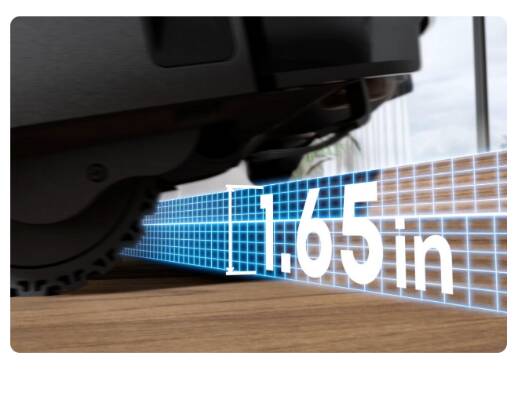
The eufy Robot Vacuum Omni S2 offers a relevant example. Its CleanMind AI and 3D MatrixEye™ 2.0 are designed to distinguish climbable surfaces from hazards. Its official specifications list support for double thresholds up to 1.65 inches (4.2 cm) and single thresholds up to 1.38 inches (3.5 cm).
These specifications may make the Omni S2 worth considering for homes with different floor levels. However, you should still measure your doorway and assess the robot under normal household conditions.
Crossing a raised sill is also different from climbing stairs. A robot may move between rooms successfully while still requiring manual placement on another floor. The key question is whether it can cross the threshold repeatedly without wheel spin, repeated impacts, scraping, or difficulty returning.
Choosing a Robot Vacuum for High Thresholds
For homes with raised doorways and noticeable floor transitions, the eufy Robot Vacuum Omni S2 is one model to consider. Its published threshold capabilities are relevant, but the suitability of any robot depends on the layout and conditions of the home.
The Omni S2 is designed to navigate thresholds, carpets, and other floor surfaces during everyday cleaning. If your home has several floor transitions or doorways that make manual repositioning inconvenient, reviewing its mobility capabilities and operating conditions can help you assess whether it suits your needs.
Before choosing the Omni S2, check the shape and slope of each threshold, the surface condition, and the available approach space. Confirm that the robot can approach the sill straight on and has enough chassis clearance to pass over its highest point. Its normal cleaning configuration should also be considered.
Supervise the first crossing. Stop the test if the robot repeatedly bumps the threshold, slips, spins a wheel, scrapes its underside, or cannot return safely.
Use the following checklist when assessing compatibility:
- Published limit: Is the climbing-height specification clearly stated, and are there model-specific conditions or qualifications?
- Actual measurement: Is the highest threshold comfortably below the published limit, or is it close to the maximum?
- Edge profile: Does the threshold rise gradually, or does it have a sharp, raised lip?
- Surface grip: Is the surface dry, stable, and free of loose material?
- Room layout: Can the robot approach straight on, or will furniture force it to turn?
- Recovery behavior: If the crossing fails, can the robot return safely and resume its cleaning route?
Check the doorway again after installation, not just before choosing a model. A new transition strip, rug edge, or flooring repair can add a few millimeters. These small changes can matter when the original measurement was already close to the robot's limit.
If you need to compare more options, browse eufy robot vacuums and match each model's capabilities to the conditions in your home before deciding.
What to Do When a Threshold Is Too High
If a threshold leaves little or no clearance for your robot vacuum, avoid forcing the machine across it. Do not remove a fixed safety, waterproofing, or building threshold without first understanding its purpose and the consequences of altering it.
A low-profile transition ramp may help by creating a more gradual slope. Choose one that is securely fixed, slip-resistant, wide enough for the robot's route, and compatible with the door's normal opening and closing.
Any adjustment should protect both the floor and the robot. Avoid loose mats, unstable wedges, exposed screws, sharp edges, and adhesives that could damage the flooring. If you rent your home, check your lease before installing a ramp or modifying a transition. Keep doorways, exits, and evacuation routes clear, and follow applicable building requirements.
Changing the cleaning plan is another practical option. You can schedule rooms separately, set a boundary around a difficult threshold, or move the robot manually when a particular area needs cleaning. This may be more reliable than allowing repeated attempts at an obstacle outside the model's stated capabilities.
Supervise the first test from both directions. Place the robot a short distance from the threshold and let it approach naturally. Stop immediately if it repeatedly bumps the sill, slips, spins a wheel, scrapes its underside, lifts abruptly, or cannot return safely. Repeatedly forcing the robot to attempt a difficult crossing is not a substitute for checking compatibility.
After making an adjustment, test the route again using the robot's normal cleaning configuration. Account for the usual furniture layout, bin, water components, and floor conditions. A successful crossing should be repeatable during ordinary cleaning, not merely possible once in an empty doorway.
Keep a record of the final measurements and the route you tested. This can help if flooring, furniture, or doorway conditions change later.
Final Considerations
Robot vacuum threshold height is useful only when compared with the actual doorway the machine must cross. Measure the vertical rise, slope length, width, edge shape, and height difference on both sides. Then assess the surface grip and approach angle before comparing those conditions with the published climbing capability of a specific model.
Treat each raised sill as part of your home's cleaning-route design. A robot vacuum is more likely to provide consistent coverage when the crossing is stable, repeatable, and comfortably within its capabilities. If the threshold is too challenging, a fixed, slip-resistant transition ramp, a revised cleaning schedule, or a designated room boundary may be a more dependable solution than relying on a marginal climb.

Comments(2)