
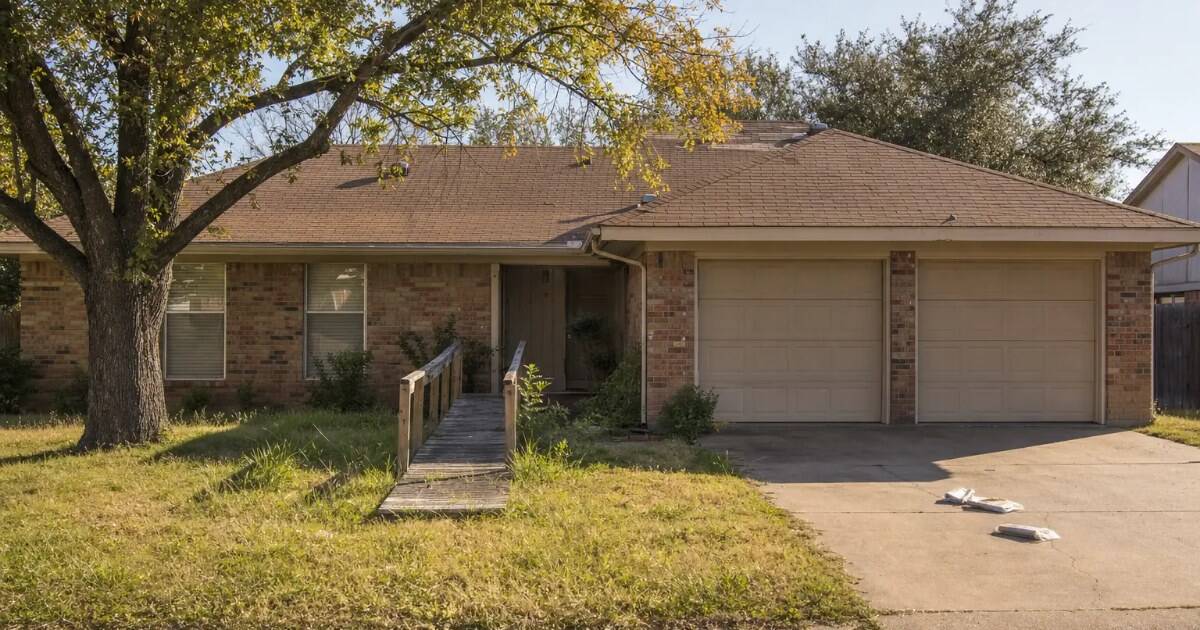
A parent in Bedford has moved into memory care, or into a spare room at one of the kids' houses. The house sits empty, and one of the children holds a power of attorney. The question I get in that spot is whether the title company has to take it. For a power of attorney in Texas real estate, the honest answer is this. A statute gives the other side a process and a clock, and the same statute lists the reasons they are allowed to say no.
This post covers one piece of that sale: the acceptance process in Texas Estates Code Chapter 751, Subchapter E. I read it on October 11, 2026, along with the statutory form in Chapter 752, and the quotes below come from that reading.
First, is it a durable power of attorney?
The acceptance rules apply to a durable power of attorney, so start there. Under Estates Code 751.0021(a), the document has to designate an agent, be signed by the adult principal (or by another adult in the principal's conscious presence, at the principal's direction), and be acknowledged before an officer who can take acknowledgments to deeds and administer oaths. It also has to contain words like "This power of attorney is not affected by subsequent disability or incapacity of the principal," or "This power of attorney becomes effective on the disability or incapacity of the principal," or similar words that make the same point.
Then check whether it reaches real estate. The statutory form in Chapter 752 grants powers line by line. Its own instruction reads: "TO GRANT A POWER, YOU MUST INITIAL THE LINE IN FRONT OF THE POWER YOU ARE GRANTING." Line (A) is "Real property transactions." Line (O) grants all of the listed powers at once. If neither one is initialed, that is the first conversation to have, and it is a conversation for a Texas attorney.
When line (A) is granted, 752.102(a)(2) lets the agent "sell, exchange, convey with or without covenants, quitclaim" or otherwise dispose of real property, and it does so "without further reference to a specific description of the real property." The house does not have to be named in the document.
Recording it in Tarrant County
A deed is a recorded instrument, so the power of attorney behind it has to be recorded too. Section 751.151 says a durable power of attorney for that kind of transaction "must be recorded in the office of the county clerk of the county in which the property is located not later than the 30th day after the date the instrument is filed for recording." For a Bedford house, that is the Tarrant County Clerk.
Recording is something the other side may require only when the law requires it. Section 751.202 says they may not demand a different form of the power, or demand recording at all, "unless the recording of the instrument is required by Section 751.151 or another law of this state." A deed is the case 751.151 covers.
Bedford is one of the Mid-Cities where we buy. If the family decides on a quick sale of the house as it sits, our Bedford page, sell my house fast in Bedford, has the way to reach us.
What the title company can ask for, and how fast
Section 751.201(a) says a person presented with a durable power of attorney "shall" either accept it or, before accepting, ask for one of three things:
- An agent's certification under 751.203, requested "not later than the 10th business day after the date the power of attorney is presented."
- An opinion of counsel under 751.204, on the same 10 business day clock. The requester has to give the reason in writing, and the opinion is at the principal's expense.
- An English translation under 751.205, if any part is in another language, requested by the fifth business day.
Once they receive a requested certification or opinion, 751.201(b) gives them until "the seventh business day" after receipt to accept, unless one of the refusal grounds applies. The agent and the other side can agree to extend these periods, under 751.201(c). And if the agent will not provide what was requested, 751.201(e) says there is no duty to accept.

What goes in the agent's certification
The certification is signed "under penalty of perjury," and 751.203 includes a form. Among other things, the agent certifies that the principal "is not deceased," that the power has not been revoked, suspended or terminated, that no permanent guardian of the principal's estate has qualified, and that no guardianship proceeding has been started. If the power only takes effect on incapacity, the requester can also ask for "a written statement from a physician attending the principal that states that the principal is presently disabled or incapacitated."
Why a title company asks for this, in my view, comes down to 751.210. A person may rely on a certification or opinion provided under the subchapter "without further investigation or liability to another person." The certification moves the risk onto the person who signed it. That is the agent. Read the form before you sign it.
When they are allowed to say no
Section 751.206 lists the grounds. A few that come up around a house sale:
- (1)(A): the agent is trying to establish a customer relationship when the principal is not already a customer.
- (4): actual knowledge that the power or the agent's authority has ended.
- (5): the agent will not provide a requested certification, opinion or translation, or what was provided is deficient.
- (6): a good-faith belief that the power is not valid, or that the agent does not have the authority to act as attempted.
- (7): a pending court case to construe the power or review the agent's conduct.
- (9): a report to law enforcement or the Department of Family and Protective Services of a good-faith belief that the principal may be subject to abuse or exploitation.
Whether ground (1)(A) fits a title company opening a new file for a seller it has never worked with is a fair question. I have not read case law on it, and I am not going to guess. Ask a Texas real estate attorney if it comes up.
A refusal has a form too. Under 751.207, the person refusing has to give the agent a written statement of the reasons, on or before the date they would otherwise have had to accept.
If the refusal does not fit the statute
Section 751.212 lets the principal or the agent sue a person who refuses in violation of the subchapter. If the court agrees, it "shall order the person to accept the power of attorney" and may award court costs and attorney's fees. The suit cannot start before the date acceptance was due. And 751.213 cuts the other way: in the circumstances it lists, the principal can end up paying the other side's costs and fees.
In a home sale with a buyer waiting, a lawsuit is almost never the fast route. In my experience the faster fix is answering the exact question the title company asked, in writing, inside the clock.
The two events that end the power of attorney
Section 751.131 lists when a durable power of attorney terminates. Two matter most for a family selling a parent's house: "the principal dies," and a permanent guardian of the principal's estate qualifies. After either one, the agent cannot sign the deed under the power, and the sale runs on different paperwork.
What I would have ready before a Bedford closing
- The signed, acknowledged power of attorney, with the durability language and line (A) or (O) initialed.
- A plan to record it with the Tarrant County Clerk, or the recorded copy if that is already done.
- The title company's name, and a call early to ask whether they will want a certification or an opinion of counsel.
- A physician's statement, if the power only takes effect on incapacity.
- The name of the attorney who drafted the power, in case an opinion of counsel is requested.
Start with the document itself. Whether it is durable, and whether line (A) was initialed, decides most of what follows.
This is general information and not legal advice. I am not an attorney.
Sources: Texas Estates Code 751.0021, 751.131, 751.151, 751.201 through 751.213, and 752.102 with the statutory form in Chapter 752, read on statutes.capitol.texas.gov on October 11, 2026.


Comments(6)