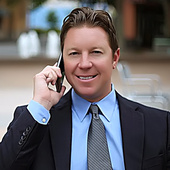
Opportunities for foreign real estate investors have increased over the last few years due to the strength of foreign currencies against the U.S. dollar and no shortage of deals in the market. California still has one of the strongest economies in the world. The quality of life and the warm weather make this state a popular place to buy a vacation home that would previously have been considered out of reach; or an investment property that will translate into savvy investment down the read.


If you're a foreigner, there are many reasons why you should invest in the U.S. real estate market now:


- Weak US dollar has given you a lot of leverage over the bargaining table
- High inventory allows for greater options, better price and more favorable terms and conditions
- Foreign real estate investment in the United States is open to everyone. As long as you can afford to buy the property or at least comply with the mortgage requirements and payments, you can secure for yourself a pretty good property in the U.S.
- U.S. state government supports foreign investments and along this line has formulated various tax breaks to encourage foreign investment on real estate. Many of these tax breaks are not available in many countries.
- Despite the devaluation of the US dollar and the wide foreclosures of a lot of property, the real estate market remains to be stable, though slightly shaky, due to foreign investors' capital appreciation.
- The current economic situation of the United State provides the perfect chance for you to make an investment.
- Mortgage financing is available.


Investing in real properties in the United States can be profitable especially during these times. In fact, it may be the wisest and most perfect investment you can make right now. Contact me for a free consultation.

Greg Stange Realtor ®
Coldwell Banker Real Estate
Top 4% Worldwide
245 Lytton Ave, Suite 100
Palo Alto, CA 94301
Office - 650.752.0815 / Fax - 650.322.3606
Email - greg.stange@camoves.com
Website - www.gregstange.com

Broker believes this information to be correct but has not verified this information and assumes no legal responsibility for its accuracy. Buyers should investigate these issues to their own satisfaction.


I have been hearing this question almost every day for the last couple of months. Let's be honest, there are a lot of people out there who have to make a daily decision whether to buy groceries for their family or put gas in their car. For majority of people a decision to purchase a real estate in these turbulent times is way out of their reach. However, if you believe in the philosophy of Warren Buffet who once said, "Be fearful when others are greedy, and be greedy when others are fearful", NOW is a good time to buy real estate, because:

Inventory is high:

     A. you can get a house you have dreamed about in location of your choice

     B. you can negotiate better price and terms (homes that have been on the market for an extended period, canceled, expired, and/or foreclosure listings)

     C. sellers need to liquidate in order to make ends meet

If you are ready to take advantage of the current situation, have cash reserves, good credit, and money for down-payment, contact me today for your complimentary consultation.

First-time buyers (people that have not owned in the past three years), you may get qualified for low down-payment and low interest rate loan with State and Federal Plans.

Looking forward to hearing from you.

Greg


Second time was certainly a charm!  With a vote of 263 to 171, the House passed the $700 billion Emergency Economic Stabilization Act of 2008.  The Senate had approved the same bill Wednesday night by a vote of 74-25.  Soon after, the President signed the bill, officially passing the far-reaching legislation.

I know the question we are all asking ourselves right now is how is this going to affect all of us.  How will it affect our retirements?  How will it affect the mortgage crisis?  How will it affect our portfolios?  The answers to these and other questions will only be answered over time but what I can tell you is that the legislation is a critical step toward stabilizing our markets.  The main goals of the act are to:

•-         Shine a new light of scrutiny and accountability on Wall Street including a curb on executive pay for companies selling assets or buying insurance from Uncle Sam. For example, any bonus or incentive paid to a senior executive officer for targets met would have to be repaid if it's later proven that earnings or profit statements were inaccurate.  The bill also underlines the Securities and Exchange Commission's power to change accounting rules on how banks and Wall Street firms value securities, and directs the agency to study the issue.  Some observers argue that tight accounting rules are a major reason for the credit crisis in the first place. Others contend that changing the so-called mark-to-market rules will just bury problems lurking beneath the surface and could further shake investor confidence in the already battered financial sector.

•-         Let financial institutions sell to the government their troubled assets, mostly mortgage related which would allow the Treasury access to the $700 billion in stages, with $250 billion being made available immediately.

•-         Provisions that support taxpayers including one that would direct the President to propose a bill requiring the financial industry to reimburse taxpayers for any net losses from the program after five years. And the Treasury would be allowed to take ownership stakes in participating companies.

•-         The bill would set up two oversight committees.  A Financial Stability Board would include the Federal Reserve chairman, the Securities and Exchange Commission chairman, the Federal Home Finance Agency director, the Housing and Urban Development secretary and the Treasury secretary.  A congressional oversight panel, to which the Financial Stability Board would report, would have five members appointed by House and Senate leadership from both parties.

•-         The bill calls on federal agencies to encourage loan servicers to modify mortgages by a number of means - including reducing the principal or interest rate. It also extends a temporary provision that exempts from federal income tax any debt forgiven by a bank to a borrower in a foreclosure.

•-         Provide tax breaks for the middle class including three key tax elements.  It would extend a number of renewable energy tax breaks for individuals and businesses, including a deduction for the purchase of solar panels.  The legislation would also continue a host of other expiring tax breaks. Among them: the research and development credit for businesses and the credit that allows individuals to deduct state and local sales taxes on their federal returns.  In addition, the bill includes relief for another year from the Alternative Minimum Tax, without which millions of Americans would have to pay the so-called "income tax for the wealthy."

So how long will we take for this to be seen on the proverbial Main Street?  According to some analysts, it will take several weeks for us to see credit unfreeze but we should see some almost immediate benefits on Wall Street.

I agree with NAR's stance that we are gratified that the government recognized the importance of passing the Emergency Economic Stabilization Act of 2008.  The health of the nation's housing market is critical to the financial well being of every household in the country and that, of course, is front and center here in California.  I believe the legislation will help restore the liquidity in the mortgage market, which will stabilize the housing market and protect home owners.  People have been, and will be debating for a very long time, the specific causes, who's to blame, who should be paying the price - but ultimately we needed quick action in the credit markets in what was quickly becoming a severe global financial crisis.


Northern California regions have experienced a price decline, but overall there is limited inventory. In a recent survey conducted by RealTrends, of the leading Broker/owners of the real estate industry, 69% of respondents said that, as of end of May, they strongly or somewhat agree that their market is showing signs of improvement.

Unfortunately too many buyers right now are relying on data reported by the media that has a three or even four month lag.  Their perception may be that nothing is selling, when in fact; the sales rate may be brisk for well-priced property. 

Our market continues to be challenged by some buyers who are waiting to see what the market is going to do.  As a Realtor, the best thing to do for our client is educate them on why waiting could cost them plenty in terms of higher prices, lower inventory and higher interest rates.  It's just a matter of time before we swiftly move from a buyer's market to a more normalized exchange between buyers and sellers and we need to educate our buyers now that if they don't act, they will reduce their purchasing power and may lose out on a bigger and better home!


Richard Smith, Chief Executive Officer for Realogy, released a video statement. He advised, "Like all downturns, this too shall pass. It's not a matter of if, but when."

Later on, Freddie Mac and NAR both predicted stabilization of the market towards to the end of 2008 and recovery and following growth in 2009.

Although nobody is a fortune teller, if these highly regarded sources a year from now we would be looking at back and kicking ourselves. Just like in the past... Sounds familiar?

For instance, our Palo Alto office noting that an all time low in inventory with about 80% of offers going into multiples.

Stay cool!


Greg Stange has extensive education and experience in marketing and sales, research and development, operations and financial planning in Real Estate and Consumer Based Industries.  Prior to his Real Estate career, Greg worked for over 8 years as an Area Director for a large Corporate Company, hiring, training, and developing a sales and marketing staff of over 300.  In addition to his years in the Corporate World, he has also managed and negotiated contracts in surplus to 15 Billion.  Greg is a Licensed Realtor with Coldwell Banker and a Registered Securities Representative with Archer Investment Advisors.


Rainmaker_large

Greg Stange

Palo Alto, CA

More about me…

Coldwell Banker

Address: 245 Lytton Ave. Suite 100, Palo Alto, CA, 94301

Office Phone: (650) 325-6161

Cell Phone: (650) 208-5196

Email Me


Links

Archives

RSS 2.0 Feed for this blog

Find CA real estate agents and Palo Alto real estate on ActiveRain.